Raliera


For club owners and directors running a tournament at their own courts, from the director of the ERA Pickleball Tour. Most tournaments that go wrong fail weeks before the day, on one of the decisions below.
Decide what kind of event it is
Start by naming the event in one sentence, because it decides everything after it. A club championship for members, an open tournament anyone can enter, a charity day where the play matters less than the turnout, and a ranked stop on a series all need different rules.
Settle three things now:
- Who can enter. Members only, members first and then everyone, or open from day one.
- What counts. Whether results go to DUPR, and whether the event is sanctioned by a governing body, which brings its own rules for formats and officiating.
- How long the day is. One day, or a weekend with doubles one day and singles or mixed the next. Work out the hours before you promise anything; see the section on court time below.
Choose formats and divisions
Formats
Three formats cover almost every club tournament:
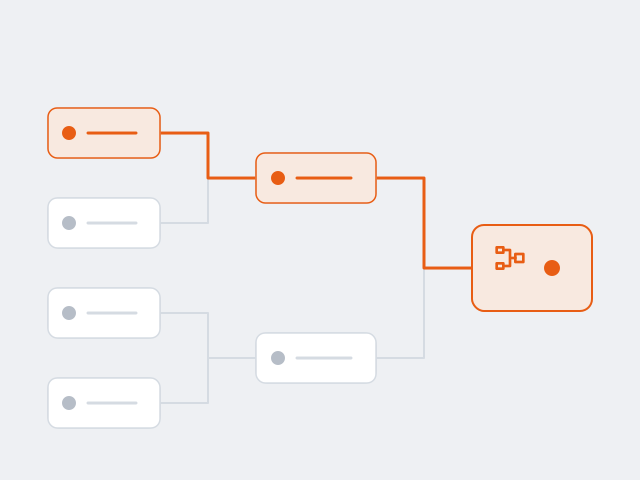
- Round robin pools, then a bracket. Teams play everyone in a small pool, and the top finishers move into a single elimination bracket. Every team gets several matches, which is what most players are paying for.
- Single elimination. Lose once and you are out. The fastest format, and the harshest; half the field plays one match.
- Double elimination. Teams drop into a back draw after their first loss and are out after the second. Fairer than single elimination, and close to twice as many matches.
For a club event, pools then a bracket is usually the right call. It guarantees play, it is easy to explain, and it finishes in a predictable time.
Pools
Pool A
A1
A2
A3
A4
Pool B
B1
B2
B3
B4
Pool C
C1
C2
C3
C4
Pool D
D1
D2
D3
D4
Quarterfinals
Semifinals
Final
A1
B2
C1
D2
B1
A2
D1
C2
QF 1 winner
QF 2 winner
QF 3 winner
QF 4 winner
SF 1 winner
SF 2 winner
Divisions
Divide the field so that matches are close. The usual splits are:
- Event: men’s doubles, women’s doubles, mixed doubles, and singles if you have the courts.
- Level: by DUPR rating range or skill level, such as 3.0, 3.5, 4.0 and 4.5 and up.
- Age: senior divisions such as 50 and up or 60 and up, by the age a player reaches during the calendar year.
Every division needs a minimum number of teams and a date by which you decide. If a division hasn’t reached its minimum by that date, merge it with the next level or close it and refund the entries. Print both the minimum and the date on the registration page, so a player in a thin division is never surprised.
Work out how many courts and hours you need
This is the step most directors skip, and the one that decides whether the last match ends at 4 PM or 9 PM. You need three numbers: how many matches each round has, how long a match takes at your club, and how many courts you have.
Count the matches.
- A round robin pool of n teams plays n × (n − 1) ÷ 2 matches. A pool of four plays 6, a pool of five plays 10, and a pool of six plays 15.
- A single elimination bracket of n teams plays n − 1 matches. A bracket of 8 plays 7.
- A double elimination bracket of n teams plays about twice that.
Time a match. Time a few real matches at your own club, at the scoring you plan to use. One game to 11, win by 2, is far shorter than best two out of three. Use your own number, not someone else’s.
Divide by courts, then add the rounds that can’t overlap. Pool matches can run on every court at once. Bracket rounds can’t: the semifinals wait for the quarterfinals, however many courts are free.
A worked example
One 16-team division, in four pools of four, with the top two from each pool going into an 8-team single elimination bracket. Assume a game to 11 takes about 15 minutes at your club and a best-of-three match about 40 minutes.
- Check-in and warm-up 30 min
- Pool play, 24 matches on six courts 60 min
- Quarterfinals 40 min
- Semifinals 40 min
- Final 40 min
- About 4 hours, with three 10-minute changeovers
The bracket takes as long as pool play even though it has a third of the matches, because its rounds run one after another. Two divisions sharing six courts don’t take twice as long: their pools can share the courts, and one division’s bracket can run while the other is still in pools. Build the day on paper before you open registration, and leave a buffer of at least half an hour.
Open registration with the rules written down
Registration is where most disputes start, so put the rules on the page players read before they pay.
- Entry fee. Per player or per team, and exactly what it includes: guaranteed matches, balls, medals or prizes. If a service fee is added, show it in the price players see first, not at the last step.
- Partners. Each player registers and names a partner, and both must register before the team is confirmed. Keep a list of players looking for a partner and help match them.
- Deadlines. When registration closes, and when the division minimums are checked.
- Withdrawals and refunds. What a player gets back if they withdraw before the deadline, after it, or if their division is closed. A full refund when you close a division is the fair minimum.
- Waivers. Every player signs your waiver before they play, ideally at registration rather than at the check-in table.
- Waitlist. What happens when a division is full, and how a spot is offered when someone withdraws.
Seed the draw by a rule you publish
Seeding puts the strongest teams in different pools, so the best matches happen at the end of the day. Publish the rule before registration closes:
- Rated teams. Seed by DUPR, using the team’s combined or average rating, whichever you state.
- Unrated players. Decide in advance where a player with no rating is placed: by a self-rating the director checks, by their result in a club league, or at the bottom of the seeding. A director who decides this on the morning of the event will be arguing about it all day.
- Players over the level. If a division has a rating limit, say what happens to a player whose rating rises above it after they register.
Then build the pools so that seeds 1 to 4 land in different pools, and the next four do too.
Run the day from one desk
On the day, one person runs the desk and nothing else. Everyone with a question goes to them, and every score comes back to them. The day runs in this order:
- Check-in. Open check-in well before the first match, by division. A team that hasn’t checked in by its first match time forfeits, and you say so in the confirmation email.
- Court calls. Call the next match to a named court as soon as one is free, and keep a visible list of who is on deck. Courts sitting empty while players wait is the most common cause of a late finish.
- Scores. Winners report the score to the desk, or players enter it themselves, the moment the match ends. The next round can’t be called until the last one is in.
- Rules questions. One person decides disputes, and their decision stands. On a club day that is the director, unless the event is officiated.
- Medal matches. Finish each division with its final on a show court, and award medals right away while players are still there.
After the event
The day after decides whether players come back.
- Results. Post results the same day, and submit them to DUPR if the event counts toward ratings.
- Refunds and payouts. Settle any refunds and prize money within the week, as promised.
- Thank you. Email every player with the results, photos and the date of the next event, while the day is fresh.
- Notes. Write down what ran late and why. The next event’s schedule starts from those notes.
A tournament planning timeline
-
8 weeks out
Date, courts, formats, divisions, entry fee, minimums and the merge date. Court time worked out on paper.
-
6 weeks out
Registration opens with the rules, refund terms and waiver on the page.
-
2 weeks out
Minimums checked. Thin divisions merged or closed and refunded. Partners matched.
-
1 week out
Registration closes. Seeding by the published rule. Pools and the schedule built.
-
3 days out
Confirmation email: check-in time, first match, the forfeit rule, what to bring.
-
The day
One desk: check-in, court calls, scores back to the desk, medals after each final.
-
The day after
Results posted and sent to DUPR, refunds settled, thank-you email with the next date.
For a smaller event at your club, such as a short round robin for a private group, the planning is the same at a smaller scale: fewer divisions, one pool and a shorter day.
This guide is general information from running a club, not legal advice. Check your policies with your own lawyer.